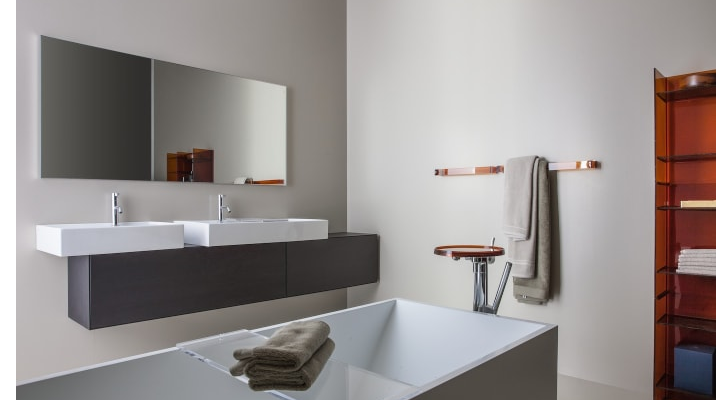
The modular color concept and the simple, always trendy aesthetic vocabulary of the Kartell by Laufen bathroom collection represent a modern approach to color while respecting the principles of good taste.
More than any other room in the house, the bathroom is made up of two different types of elements. There are movable or easy-to-change items, such as shelves, chairs and accessories, and semi-permanently or even permanently mounted furniture, such as the sink, bathtub or shower. These are generally replaced after a longer period of use and with significant effort.
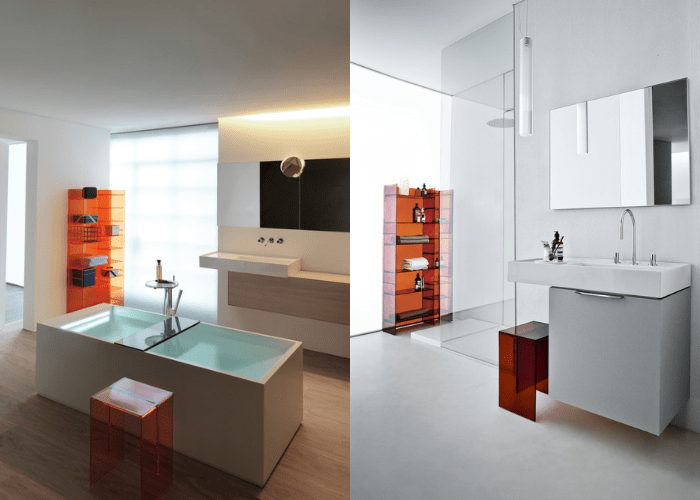
This particularity of the bathroom inspired the Italian design company Kartell, in collaboration with the Swiss brand Laufen, to create a complete bathroom collection. The two companies cooperated to develop elements that are easily adaptable to the bathroom space. This is how Kartell by Laufen was born, a diverse range, with pieces that allow a free approach to space planning. The result is a bathroom with simple, minimalist lines, but with light accents of retro colors.
Subtle design and nuances for sanitary facilities
Laufen approached a geometric design with well-defined lines for the Kartell collection. The use of the innovative SaphirKeramik material has facilitated the creation of sanitary objects with increased functionality and a minimalist, even simplistic, but timeless appearance.
There are several color options for bathroom fixtures, but none are garish. The color scene is reserved for accessories and furniture from the same Kartell collection. Washbasins and toilets are available in shades such as matt or glossy white and black, graphite and gray, and pedestal washbasins are available in combinations of white and black, but also in matt gray, matt white, glossy white or glossy black.
Color, light and transparency draw emotions
The Italian brand Kartell has left its mark on the collection of the same name through furniture and accessories (mirrors, shelves and shelves, lamps, towel racks, soap dishes and glasses), made of acrylic glass, in different colors, with a semi-transparent appearance. They bring a cheerful and complementary look to Kartell by Laufen bathrooms with subtle retro accents.
With an always trendy design, the furniture elements are available in a wide range of colors: copper, gold, silver, ocher, emerald green, powder pink, smoky gray or tangerine orange. There are also white or black versions, for those who want a simpler, colorless bathroom.
Bathroom furniture creates harmony
Designed in a modern minimalist style, Kartell by Laufen bathroom furniture fits naturally into this collection. Balanced color variations of sanitary objects make it possible to create contrasts and accents using bathroom furniture in bolder colors. Laufen opted here for mustard yellow, gravel gray, blue gray, ocher, dark gray and matt white.
The vanities and storage cabinets have an ergonomic design, which allows them to be installed even in small guest bathrooms.
The bathroom chameleon
The simple, minimalist design of the sanitary ware from the Kartell by Laufen collection ensures increased functionality in the bathroom. On the other hand, bathroom furniture and accessories made of acrylic glass emphasize the chameleon personality of the bathroom and, with the help of their color, light and transparency, transform it into a sensual and emotional space.
If a refresh of the ambiance is desired to update the design style, these elements can be easily changed.
The Kartell by Laufen collection offers complete solutions for a bathroom with reinterpreted retro accents that bring the nostalgia of the 1970s into the ambiance. The chromatic contrast, superior quality and simplistic design are the characteristic features of this special collection, signed by international designers Ludovica and Roberto Palomba.
This combination of permanent and easily replaceable elements makes the bathroom an interesting space for experimenting with design trends. While major fixtures are usually selected with durability and longevity in mind, smaller accessories allow homeowners to introduce fashionable colors, textures, and shapes without committing to a complete renovation.
The renewed interest in 1970s interiors therefore does not require recreating a bathroom exactly as it would have appeared decades ago. Contemporary interpretations borrow specific ideas from the period and combine them with cleaner lines, modern materials, and more practical solutions.
Color Without Overwhelming the Space
Color was one of the defining characteristics of 1970s interior design. Browns, oranges, greens, yellows, and earthy shades appeared frequently throughout the home. In contemporary bathrooms, these tones tend to be used in a more controlled way.
Instead of covering every surface with a strong color, designers can introduce it through selected elements. A colored cabinet, shelf, mirror frame, stool, towel, or decorative accessory may be enough to establish the desired atmosphere.
Neutral backgrounds can help balance these stronger accents. White, cream, gray, and natural materials provide visual breathing room while allowing individual colors to attract attention.
This modular approach also has a practical advantage: smaller elements can be changed relatively easily when tastes evolve.
Choosing Permanent Elements Carefully
Bathtubs, showers, sinks, and other fixed installations require more consideration because replacing them usually involves additional work and expense. For this reason, timeless shapes and durable materials can be particularly valuable.
Simple forms can provide a neutral foundation for different decorative styles. A bathroom can then be updated over time by changing accessories, lighting, textiles, wall colors, or smaller pieces of furniture instead of replacing its main fixtures.
The same principle applies to tiles. Highly distinctive patterns can create an impressive result, but they are considerably more difficult to replace than a painted wall or a set of accessories. Combining restrained permanent surfaces with more expressive removable elements offers greater flexibility.
Geometry and Rounded Forms
Another characteristic associated with 1970s design is the use of distinctive geometric and curved forms. Contemporary bathrooms often reinterpret these shapes through rounded mirrors, cylindrical accessories, curved basins, and furniture with softened edges.
The objective is not necessarily to reproduce retro furniture. Instead, these forms can add personality to an otherwise minimalist environment.
Curves can also soften bathrooms dominated by straight architectural lines and hard materials. When combined with simple cabinetry and uncluttered surfaces, they create a balanced contrast between contemporary minimalism and retro inspiration.
Materials Add Warmth and Texture
The influence of the 1970s can also be introduced through materials. Wood and wood-effect surfaces are particularly useful for adding warmth to bathrooms, especially when combined with ceramic, glass, or stone.
Textured surfaces can provide additional visual interest without requiring intense colors. Ribbed furniture fronts, patterned tiles, matte finishes, and subtle natural textures can create depth while maintaining a sophisticated appearance.
Lighting is equally important. Warm illumination can reinforce earthy colors and make natural materials appear more inviting, while strategically placed lights can emphasize individual design elements.
A Modern Interpretation of Retro Style
The return of 1970s influences demonstrates how interior design trends can be revived without being copied literally. The most successful contemporary bathrooms select recognizable elements from the period—warm colors, geometric forms, rounded details, and natural materials—and adapt them to current expectations of comfort and simplicity.
Collections such as Kartell by Laufen illustrate how color can become part of a flexible bathroom concept rather than dominating the entire room. Permanent fixtures can remain relatively timeless, while furniture and accessories provide opportunities for greater experimentation.
Ultimately, this balance makes the trend easier to incorporate into everyday homes. By investing carefully in long-lasting bathroom fixtures and using replaceable elements for stronger decorative statements, homeowners can enjoy a distinctive interior while retaining the freedom to update it as styles and personal preferences change.
Latest Posts Published

10 reasons to buy an LED desk lamp
Cosmina Ruxandra Chinciu: The joy of the client when he sees that in reality
Luxury bedrooms – Poliform product
Shower with gutter – solution for continuous floors in bathroom desig
Studio layout – creative configuration solutions
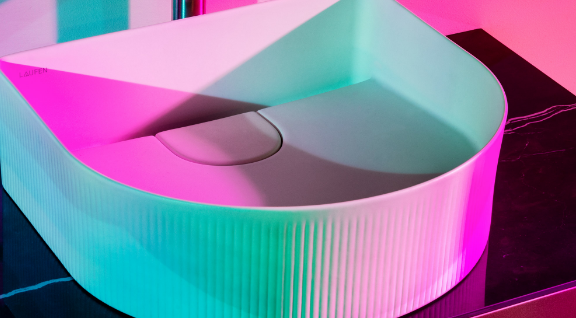
Reinventing the bathroom: Laufen’s Sonar collection sets new standards
The kitchen. The heart of the house
Living room interior design – Design styles
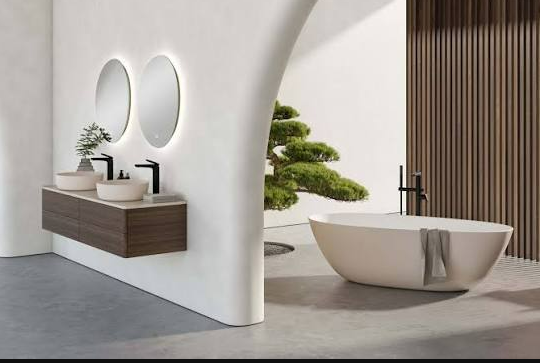
5 bathroom design ideas from Villeroy & Boch