If you are new to the field of architecture, you may have come across certain terms or techniques that you are not yet very familiar with. And one of those terms may be bioarchitecture.
This existing way of designing places that can be homes, offices or large buildings is still a relatively new term in the world of architecture, so don’t worry, we are here to help you get to know this methodology better.
What is bioarchitecture?
Also known as organic architecture, bioarchitecture involves creating more sustainable projects directly linked to nature. The main objective of this type of projection is to align the ecosystem with the necessary constructions.
Bioarchitecture promotes living environments that preserve the environment through project ideas that eliminate risks to nature or harm society. In other words, this methodology aims for complete harmony between people, the environment in which they live and the spaces they inhabit.

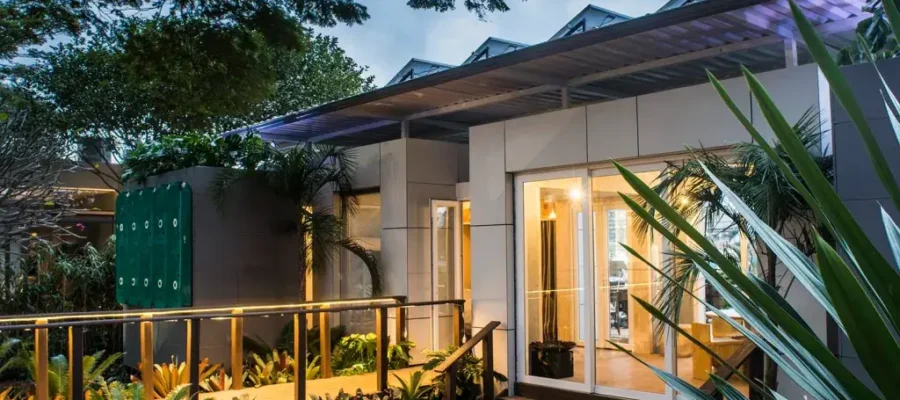
Homes designed with solar panels, green roofs, large windows and doors to circulate ventilation, capture rain and reuse that water to water plants or wash the car, are simple examples of bioarchitecture in action.
But why is bioarchitecture so important in the creation of projects?
In addition to seeking to preserve the environment and, therefore, guarantee the quality of life of future generations, bioarchitecture also promotes savings in the pockets of those who will benefit from the project and, of course, versatility in the creation of the architect responsible for applying this method.
We will explain these situations as follows. Imagine a client wants to renovate their home, but, without much technical knowledge and sustainable vision, they end up focusing only on designing how their home will look. This person then asks the architect to leave the environment with this refined appearance, by investing in artificial lighting in all environments. Soon the architect is following the client’s instructions, but when it comes time for the client’s approval, oops! the client realizes that maintaining this residence can be very expensive and has no return, whether in terms of savings or quality of life.
In this case, the architect would have two tasks: reformulate the project idea and obtain approval for this new project.
This would result in a waste of time, in addition to demonstrating a lack of control over a project, after all, the client requests a project as they wish, but an architectural professional has the power to determine whether such a project is viable or not. And by demonstrating mastery of their service, an architect can demonstrate their skill and creativity in any environment.
Bioarchitecture = quality of life and ecologically correct spaces
Have you seen how easy the concept of Bioarchitecture, as well as how this method is applied in practice, is to understand? Whether it is a house, a building, an office, etc., it is possible to make the environment more sustainable and full of comfort, in addition to generating savings in the pockets of those who choose this project.
And the coolest thing is, it doesn’t matter if you’re an architecture professional who just graduated or have been building your career for years. Bioarchitecture is an invitation to a better life, and we can all make it happen. So you know, don’t be afraid to dare! Present this sustainable project idea to your client.
Bioarchitecture is an approach that seeks to create buildings with greater consideration for the environment, available natural resources and the well-being of the people who use them. Rather than focusing exclusively on appearance or construction costs, it considers how a building interacts with its surroundings throughout its useful life.
This can influence everything from the orientation of a house and the materials selected for construction to ventilation, natural lighting, water use and energy consumption.
What Is Bioarchitecture?
In simple terms, bioarchitecture combines architectural design with environmental principles. Its objective is to create comfortable and functional spaces while reducing unnecessary environmental impact.
This does not mean that every bioarchitectural project needs to look rustic or be built entirely from natural materials. Contemporary homes, offices and larger buildings can incorporate these principles while maintaining a modern appearance.
The approach begins by understanding the location. Climate, sunlight, prevailing winds, vegetation, terrain and locally available resources can all influence the design.
Taking Advantage of Natural Light
One important principle is making intelligent use of sunlight. The position and dimensions of windows can affect both interior comfort and energy consumption.
A carefully oriented building may receive useful natural light during much of the day, reducing dependence on artificial lighting. At the same time, excessive direct sunlight needs to be controlled to prevent rooms from becoming uncomfortably hot.
Architectural elements such as overhangs, shutters and external shading can help regulate solar exposure according to local conditions.
Natural Ventilation
Air circulation is another fundamental consideration. Properly positioned windows, doors and openings can encourage natural ventilation and improve indoor comfort.
Cross ventilation occurs when air can enter from one side of a space and exit from another. When incorporated correctly, this strategy may reduce the need for mechanical cooling during suitable weather conditions.
The effectiveness of natural ventilation depends heavily on climate and building orientation, which is why bioarchitecture needs to respond to each specific location rather than applying the same solution everywhere.
Selecting Materials Carefully
Materials have an important role in bioarchitectural projects. Designers may consider their origin, durability, environmental impact, maintenance requirements and suitability for the local climate.
Locally sourced materials can sometimes reduce transportation requirements while helping a building maintain a stronger connection with regional architectural traditions.
Wood, stone, earth-based materials and other natural options may be appropriate for certain projects. Recycled or reused materials can also be considered when they meet structural and safety requirements.
However, a material should not be selected simply because it is described as natural. Its complete performance and intended application need to be evaluated.
Improving Energy Efficiency
Reducing unnecessary energy consumption is another important objective. Good insulation, appropriate windows and thoughtful orientation can help maintain more stable indoor temperatures.
Efficient lighting and heating or cooling systems can complement these passive architectural strategies.
Renewable technologies such as solar panels may also be incorporated, but technology is only part of the solution. A building designed to require less energy in the first place can provide significant long-term advantages.
Responsible Water Management
Bioarchitecture can also consider how water enters, moves through and leaves a property.
Depending on local regulations and conditions, rainwater collection can provide water for certain non-potable applications. Efficient fixtures can reduce unnecessary consumption, while landscape design can help manage rainfall naturally.
Outdoor areas can be planned with vegetation suited to the local climate, potentially reducing irrigation requirements compared with landscapes that depend heavily on additional water.
Connecting Buildings With Nature
The relationship between interior and exterior environments is another characteristic commonly associated with bioarchitecture.
Courtyards, terraces, gardens, vegetation and strategically positioned windows can create stronger visual and physical connections with nature. Natural materials and daylight can reinforce this relationship inside the building.
This approach can also influence landscaping. Rather than treating the garden as an independent decorative feature, architecture and landscape can be developed as parts of the same project.
Is Bioarchitecture the Same as Sustainable Architecture?
The concepts overlap considerably, but they are not always used in exactly the same way. Sustainable architecture is a broad field concerned with reducing environmental impact throughout design, construction, operation and eventually renovation or demolition.
Bioarchitecture often places particular emphasis on designing in response to natural conditions and creating a closer relationship between buildings, people and their environments.
In practice, many projects incorporate ideas from both approaches.
A More Conscious Approach to Building
Bioarchitecture represents a shift from thinking about a building as an isolated object to understanding it as part of a larger environment.
Sunlight, wind, water, climate, vegetation and materials become active considerations during the design process. When these factors are addressed from the beginning, they can contribute to spaces that are comfortable, efficient and better adapted to their location.
For anyone beginning to explore architecture, the most important idea is simple: good design is not only about how a building looks. It is also about understanding how that building works, how people experience it and how intelligently it interacts with the environment around it.
Latest Posts Published

10 reasons to buy an LED desk lamp
Cosmina Ruxandra Chinciu: The joy of the client when he sees that in reality
Luxury bedrooms – Poliform product
Shower with gutter – solution for continuous floors in bathroom desig
Studio layout – creative configuration solutions
Reinventing the bathroom: Laufen’s Sonar collection sets new standards

The kitchen. The heart of the house
Living room interior design – Design styles
5 bathroom design ideas from Villeroy & Boch