We loved the Canevas Spaces collection created by young designer Charlotte Lancelot for Gan Rugs. And after seeing it, you too will understand why. Gan Rugs is a brand of the Spanish company Gandia Blasco, founded in 1941, known for its outdoor furniture, but above all for its absolutely captivating collections of home textiles, from rugs, upholstery fabrics to cushion covers and other accessories. The collection designed by Charlotte caught our attention because it resonates with the artisanal art side. She brought back to the forefront a traditional way of sewing, present in many cultures, namely cross stitch. But look how the crosses, which we also made at school, placed in a different context, become contemporary. Paradoxically, something about craftsmanship makes us think of pixels.
Beautiful rugs and small pieces of furniture created by Charlotte Lancelot
The collection includes rugs, poufs and cushions with decorative handmade designs. Yes, each cross was planted by the hand of an Indian artisan, thanks to a collaboration between Gandia Blasco and artisan communities in Asia, which aims to improve the quality of life of the inhabitants here. If soft felt was used for the filling of duvets, wool is the basic material for carpets. In addition, the feeling of comfort is imprinted by these pleasant textiles. And the pattern of the crosses is made of thick wool fibers that seem to bind the pieces of soft felt together well. The collection is aptly named Canvas Spaces – yes, indeed, it is as if the spaces where these textile pieces are located could be compared to large canvases, where interior designers place everything as if in a pictorial whole.
The collection created by Charlotte Lancelot is also very versatile. The graphic similarity between the cross and the pixel means that the objects designed by it find their perfect place in minimalist as well as contemporary, classic or rustic interiors. Floral patterns are downright romantic and have the power to transform the perception of the environment in which they are present. Pastel tones also make it possible to fit rooms perfectly in various arrangements. And they instantly make everyone feel warm and cozy, even when they’re in grayscale. It’s thanks to wool, this material that is so familiar, natural and warm.
It is surprising that Charlotte Lancelot, at only 33 years old (she was born in 1980), has collaborations with major companies in her portfolio. She says that in her work she becomes emotionally attached to the objects she creates. and is interested in updating traditional work techniques, improving people’s living conditions and ecology. He obtained his industrial designer diploma in 2003, after graduating from the Brussels School of Arts. After obtaining his diploma, he worked for two years in the office of architect Alain Berteau, also a designer. After two years, she created her own studio and her launching pad was practically at the Milan Furniture Fair, where in 2006 she exhibited her creations at the Salone Satellite (aimed at young designers). The same year, and this is no coincidence, because this is what happens if you make yourself visible at a fair like the one in Milan, Wallpaper magazine invited him to design the Armani Theater space during Designweek.
And things have evolve
he has participated in numerous trade fairs and exhibitions, and now he collaborates with companies like Ligne Roset, Koziol, Konstantin, Kidslab. And she did not hesitate to participate in even stranger, but ambitious projects, like that of 2007, reinventing the image of taxis in Brussels, her hometown. Since 2007, he has taught design at the Institute of Interior Architecture of Saint-Luc. 2010 is also a favorable year for Charlotte, the Museum of Modern Art in Luxembourg commissions a table service from her and Elisabeth Leriche presents her works in the future trends section of the prestigious Maison & Objet show. Look, he now signs this beautiful Canevas Spaces collection, of which you can also have the pieces at home by ordering from Delta Studio, the company that brings to Romania the wonderful objects produced by Gandia Blasco.
This contrast between traditional craftsmanship and a visual language that resembles digital pixels is precisely what gives the collection its distinctive personality. Cross-stitch is normally associated with handmade textiles, decorative embroidery and techniques passed from one generation to another. Here, however, the familiar pattern is enlarged and transformed into a graphic element suitable for contemporary interiors.
By changing the scale, colors and context of the stitches, Charlotte Lancelot demonstrates how a traditional technique can feel surprisingly modern. From a distance, the compositions can resemble geometric or pixelated patterns. When viewed more closely, their textile character and handcrafted inspiration become much more apparent.
From Embroidery to Interior Design
Cross-stitch traditionally relies on a grid where small X-shaped stitches gradually create an image or decorative pattern. The Canevas concept takes this recognizable structure and expands it into objects that occupy a much more significant place within a room.
Instead of appearing as a small decorative detail, the pattern becomes part of rugs, cushions and upholstered surfaces. This change in scale gives the technique an entirely different visual impact.
The result works particularly well in contemporary spaces because the geometric structure of cross-stitch naturally complements simple architectural lines. At the same time, its connection with traditional embroidery introduces warmth and a sense of craftsmanship.
A Dialogue Between Handmade and Digital Design
Perhaps the most interesting characteristic of the collection is its resemblance to pixel art. Both pixels and cross-stitches depend on small individual units that combine to create a larger composition.
This visual similarity connects two very different worlds. One represents slow, traditional craftsmanship, while the other immediately recalls screens, digital graphics and modern technology.
Bringing these references together creates an interesting decorative language. The designs can feel nostalgic and contemporary at the same time, making them suitable for interiors that combine different periods and influences.
Texture Becomes Part of the Decoration
Unlike a printed geometric pattern, embroidered or woven surfaces have physical depth. Light interacts with the raised textile structure, producing subtle shadows and variations throughout the day.
This makes texture just as important as color. In minimalist rooms dominated by smooth walls, glass, metal or simple furniture, a strongly textured rug can introduce softness and visual interest without requiring additional decorative objects.
Cushions and upholstered pieces can achieve a similar effect on a smaller scale. They provide an easy way to introduce pattern while maintaining flexibility within the interior.
Using Statement Textiles at Home
Distinctive rugs can function almost like artwork. Rather than treating them as purely practical floor coverings, they can establish the color palette and personality of an entire room.
When a rug already contains a strong pattern, surrounding furniture can remain relatively simple. Neutral sofas, natural wood, restrained lighting and uncomplicated accessories allow the textile to become the focal point.
Alternatively, smaller pieces inspired by the same aesthetic can be used to create more subtle accents. Cushions are particularly useful because they can introduce color and texture without permanently changing the room.
The combination of handcrafted-looking textiles with contemporary furniture can also prevent modern interiors from appearing overly cold or uniform.
When Tradition Becomes Contemporary
The Canevas Spaces collection demonstrates that traditional techniques do not necessarily belong exclusively to traditional interiors. By reconsidering scale, composition and application, something as familiar as cross-stitch can become a striking element of contemporary design.
Charlotte Lancelot’s approach connects craftsmanship with a graphic aesthetic that unexpectedly recalls the digital world. This relationship between stitches and pixels gives the collection its unusual character while preserving the warmth and texture associated with textile work.
Ultimately, the project illustrates how interior design can rediscover familiar techniques rather than constantly searching for completely new ones. Sometimes innovation comes from looking at an old craft differently—and giving it a new scale, purpose and context.
Latest Posts Published

10 reasons to buy an LED desk lamp
Cosmina Ruxandra Chinciu: The joy of the client when he sees that in reality
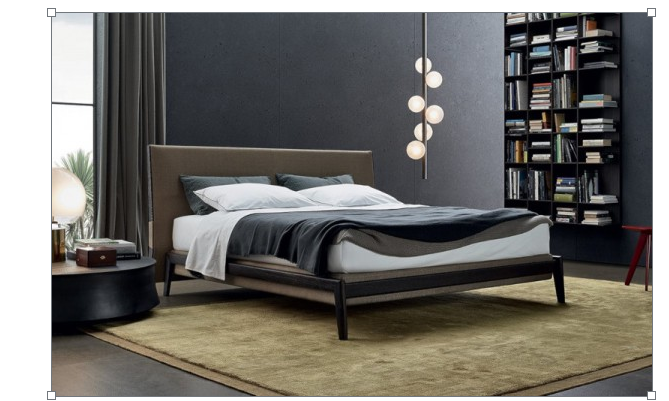
Luxury bedrooms – Poliform product
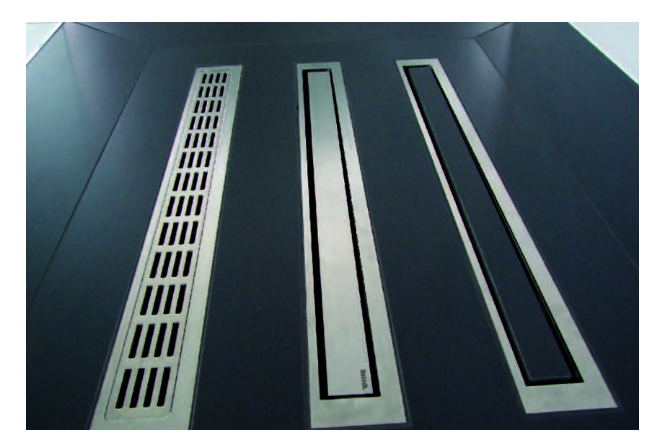
Shower with gutter – solution for continuous floors in bathroom desig
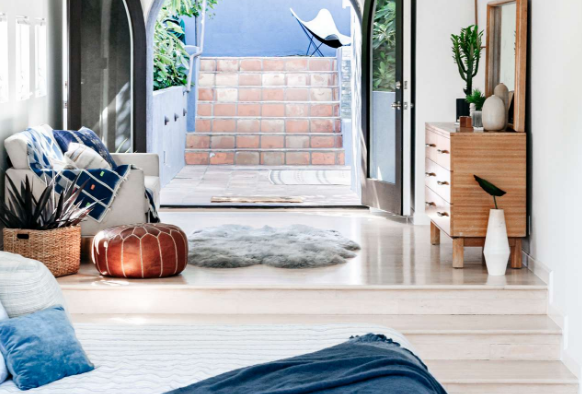
Studio layout – creative configuration solutions
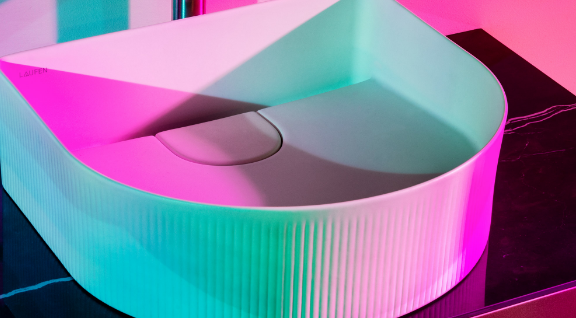
Reinventing the bathroom: Laufen’s Sonar collection sets new standards
The kitchen. The heart of the house
Living room interior design – Design styles
5 bathroom design ideas from Villeroy & Boch