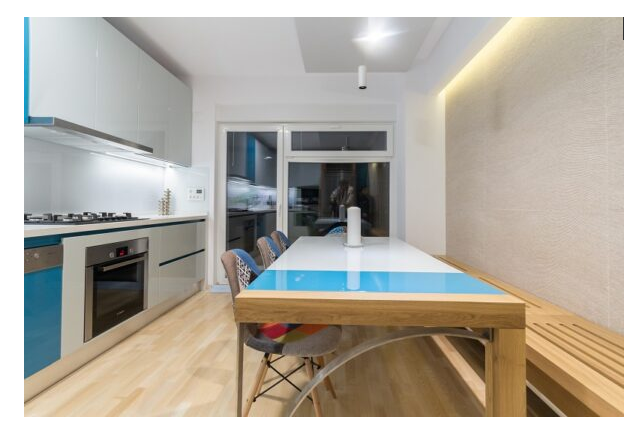
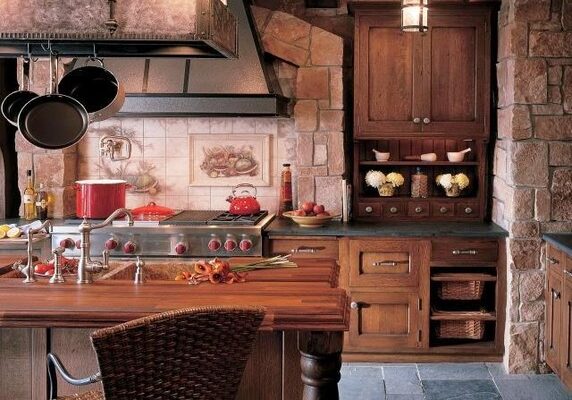
Most kitchens these days are an important part of any home. These can be open spaces with washing up stations, a meal preparation area, a table for example, these are the most common elements of a typical 19th century kitchen. XXI.
But if we go back 100 years ago, things weren’t like that.
Discover how cuisine has evolved from the Middle Ages to today.
As Csmall houses from the Middle Ages to the 18th century
Cooking in the Middle Ages was, as it is still today, a common and social act. In those days, the only source of light and heat was a fire, usually placed in the middle of the room. These fires became a problem for communities, due to the vast areas of smoke they produced. It wasn’t until the 16th century that fireplaces were adopted across Europe, and because they were so large, they separated the room into two areas: one for cooking and the other for living.
Cuisine as we know it today began to take shape…
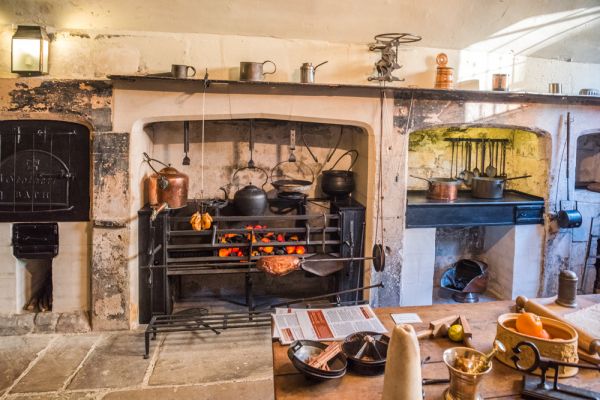
The first changes in the 18th and 14th centuries
Economic and social changes in the 18th and 19th centuries made kitchens very popular. Increased trade and appreciation of foreign cuisines led to the emergence of more elaborate cooking styles.
New technologies, such as cast iron ranges, have increased productivity and provided efficiency in the kitchen.
At this time, despite the large number of servants to cook and clean, the spaces reserved for the kitchens were dark, cramped and located at the back of the house, because at the time it was a sign of poor hospitality for a noise or smell from the kitchen to spread to the rest of the house.
The 20th century and the industrial revolution
If the pace of change in the 18th and 19th centuries was rapid, then it was unstoppable in the 20th century. As Europe and America were dominated by industrialization, the kitchen was one of the places where change was most noticeable.
Factories produced everything from cotton to steel to kitchen appliances, and cabinets were produced in large quantities and sold at a lower price than ever before.
Another major development of the early 20th century was the introduction of gas stoves. In previous decades, families relied on coal to power their cooking equipment. But even so, kitchens were seen as a place that served only practical purposes.
A turning point in the 1920s
The 1920s were the decade that saw the most dramatic changes in kitchens. Architect Margarete Schütte-Lihotzky was responsible for creating practical, efficient and compact kitchens, known as Frankfurt kitchens, which would solve several post-war housing problems in major cities.
These had a compact design where everything was within reach, saving time when doing household chores. This also gave rise to the idea of the “golden triangle”, in which the stove, refrigerator and dishwasher are ideally placed for maximum efficiency.
From the 40s to the 80s
Unlike the 20th century, where the main thing was that the space was practical, between 1940 and 1980, aesthetics became more important. People have become more demanding of unusual appliances, utensils and cabinets.
Freestanding cabinets fell out of fashion and rows of fully fitted cabinets, worktops and appliances emerged.
Kitchens from 1959 have become an icon of interior design. The cabinets were luxurious, built with appliances and a clean style. In the 1960s and 1970s, cheaper kitchens were built from MDF (fiberboard) to replace the more durable ones.
The current and the future
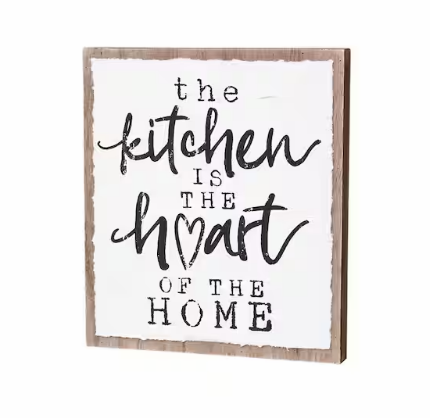
Today, kitchens are the heart of a home and are now one of the places where you can do it all: cook, entertain, relax and work. It is therefore very appreciated that they are spacious, bright, practical and elegant.
But what do we expect from the kitchens of tomorrow? Appliances with self-cleaning ovens, boiling water taps and instant ice makers are now commonplace in contemporary kitchens. The most advanced technologies such as smart kitchens are also highly anticipated by consumers. From refrigerators that rearrange milk to knives and forks that send signals to eat more slowly.
As European homes evolved, cooking gradually moved away from the central open fire toward more specialized spaces. The introduction and wider adoption of chimneys helped direct smoke outside, making interiors more comfortable and allowing the cooking area to become better defined.
Over the following centuries, changes in architecture, technology and everyday habits would completely transform the kitchen. What began as a basic place for preparing food eventually became one of the most technically sophisticated and socially important rooms in the home.
From Open Fires to Dedicated Kitchens
Early cooking spaces were organized primarily around the fire. There were no standardized work surfaces, integrated cabinets or specialized appliances. Utensils and ingredients needed to remain relatively close to the heat source, and food preparation was largely determined by the available equipment.
As fireplaces and chimneys became more common, cooking could be moved toward a wall. This represented an important change because the center of the room was no longer occupied by an open fire.
In larger homes, kitchens eventually became separate service areas. This separation was particularly noticeable in wealthy households, where food preparation could take place away from formal dining and living rooms.
The Stove Changes Everything
The development of enclosed cooking stoves represented another major step. Compared with an open hearth, a stove offered greater control over heat and made it possible to organize cooking more efficiently.
During the 18th and 19th centuries, different stove designs appeared, eventually followed by gas-powered models. These innovations reduced dependence on a large open fireplace and influenced the physical organization of kitchens.
Cooking equipment became more compact, and the room could gradually incorporate dedicated surfaces for preparation and storage.
The arrival of gas and, later, electricity would accelerate this transformation.
Running Water and Improved Hygiene
Another fundamental development was the introduction of running water into homes.
Before modern plumbing, water needed to be transported and stored manually, making cooking and cleaning considerably more labor-intensive. A permanent water supply and drainage system allowed the sink to become one of the central elements of kitchen design.
Improved surfaces and storage also contributed to changing standards of hygiene. Materials that could be cleaned more easily became increasingly desirable, particularly around food preparation areas.
The kitchen was becoming not only more technologically advanced but also more organized.
The 20th-Century Functional Kitchen
During the 20th century, designers began studying the kitchen as an efficient workspace.
Instead of placing furniture and equipment wherever space was available, kitchens could be planned according to sequences of activities: storing ingredients, washing food, preparing it, cooking and cleaning afterward.
This encouraged more standardized countertops, cabinets and work areas. The relationship between the refrigerator, sink and stove became an important consideration when planning circulation.
Built-in cabinetry also changed the appearance of the room. Rather than containing a collection of independent pieces of furniture, the kitchen increasingly became a coordinated system.
Appliances Transform Everyday Life
Electricity introduced an entirely new generation of domestic equipment.
Refrigerators changed food storage, while electric and gas ovens provided increasingly precise cooking conditions. Mixers, toasters, coffee machines and other small appliances gradually became common features.
Dishwashers reduced the amount of manual cleaning required, while extraction systems helped control steam, odors and cooking fumes.
As technology progressed, appliances also became integrated into kitchen furniture. Refrigerators and dishwashers could disappear behind cabinet fronts, while ovens could be positioned at more convenient heights.
The Kitchen Becomes Social Again
Interestingly, the history of kitchen design has partly returned to its origins.
Medieval cooking took place around a communal fire, making food preparation naturally social. In later centuries, kitchens often became isolated service areas. Contemporary open-plan homes have once again connected cooking with social life.
Today, kitchens frequently open directly onto dining and living areas. The person preparing food can interact with family members and guests rather than remaining separated in another room.
Kitchen islands reinforce this idea. They can function simultaneously as preparation surfaces, storage units, breakfast counters and informal gathering places.
Technology in the Contemporary Kitchen
Modern kitchens continue to evolve through technology.
Induction cooktops, efficient ovens, advanced refrigerators and intelligent lighting systems offer levels of convenience that would have been unimaginable in earlier domestic kitchens.
However, contemporary design increasingly attempts to hide some of this complexity. Handleless cabinets, concealed appliances and integrated storage can produce a visually simple room despite the amount of technology it contains.
Materials have evolved as well. Natural stone, engineered surfaces, stainless steel, wood, glass and porcelain provide different combinations of durability and appearance.
From Necessity to the Heart of the Home
The evolution of the kitchen reflects changes not only in technology but also in society. The room has moved from an open fire surrounded by basic utensils to a carefully planned environment containing specialized appliances, storage and work surfaces.
Fireplaces, stoves, plumbing, electricity and modern appliances each contributed to this transformation. Yet the social role of cooking has remained remarkably important.
Looking Back at the Evolution
Although today’s kitchen bears little physical resemblance to a medieval cooking space, both share a fundamental purpose beyond food preparation: bringing people together.
Modern technology has made cooking cleaner, safer and more convenient, while contemporary architecture has once again opened the kitchen to the rest of the home.
From the communal hearth to the modern kitchen island, centuries of architectural and technological development have changed the tools and surroundings—but cooking continues to be one of the everyday activities around which domestic life is organized.
Latest Posts Published

10 reasons to buy an LED desk lamp
Cosmina Ruxandra Chinciu: The joy of the client when he sees that in reality
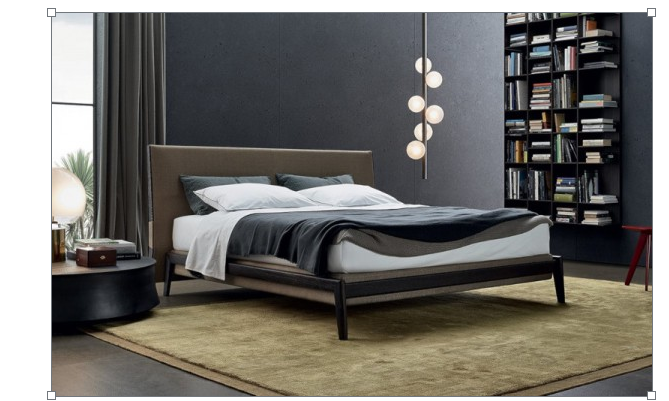
Luxury bedrooms – Poliform product
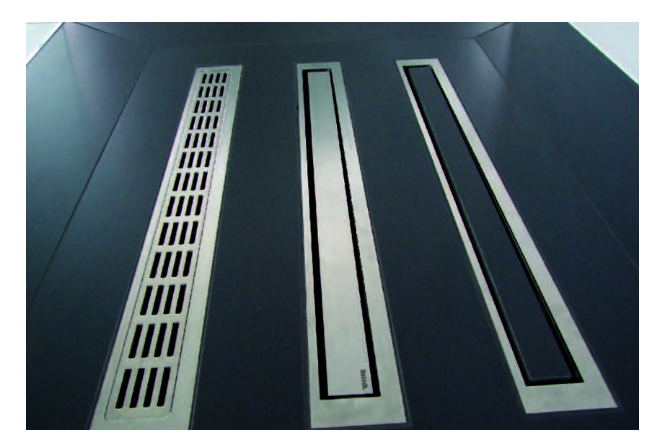
Shower with gutter – solution for continuous floors in bathroom desig
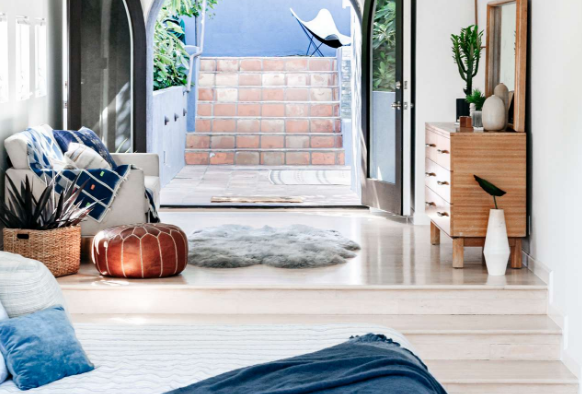
Studio layout – creative configuration solutions
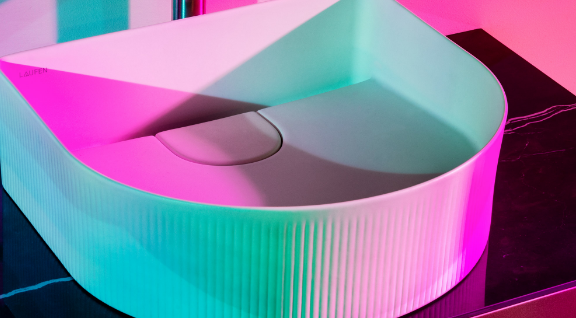
Reinventing the bathroom: Laufen’s Sonar collection sets new standards
The kitchen. The heart of the house
Living room interior design – Design styles
5 bathroom design ideas from Villeroy & Boch