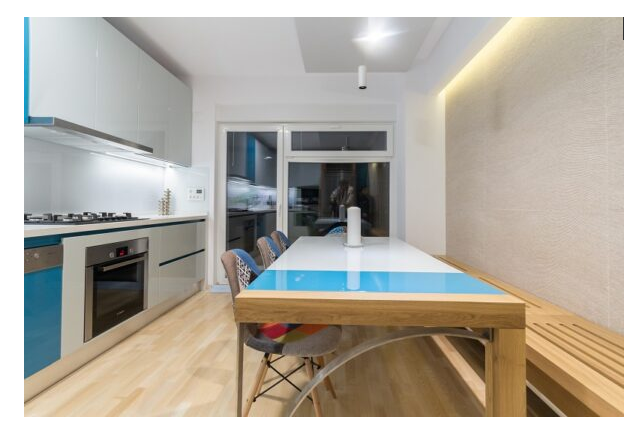

Children’s Day is approaching and you don’t know what to give your children? I have a fantastic suggestion for you! Decorating kids’ rooms may not be something kids think about a lot, but if you follow all of our decorating tips, they’ll love their new space
Your child’s bedroom is the space in the house where they spend most of their time, and because it’s so important to them, you need to make it like it’s the best in the world! I will give you 10 tips to make it more comfortable, comfortable, enjoyable and useful so that your child can play, sleep, be safe and calm.
10 tips for decorating children’s rooms
The bedroom should reflect your child’s personality, because it is the area where he plays, receives his friends and studies in complete peace and quiet.
Get inspired here to find some ideas for your children’s room and learn how to use each decorative element.
1. Stickers and Murals
In children’s rooms, cartoon stickers according to the child’s preferences, illustrations with playful elements (balloons, trees, boats, cards, animals) and also those that glow in the dark (planets, stars) are quite common.
If you don’t want to go with stickers, you can add color or patterns to a wall.
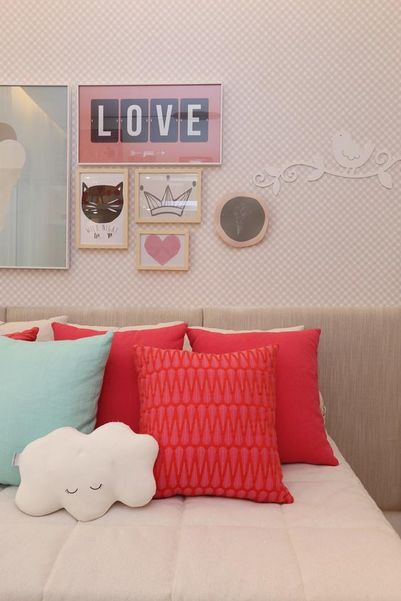
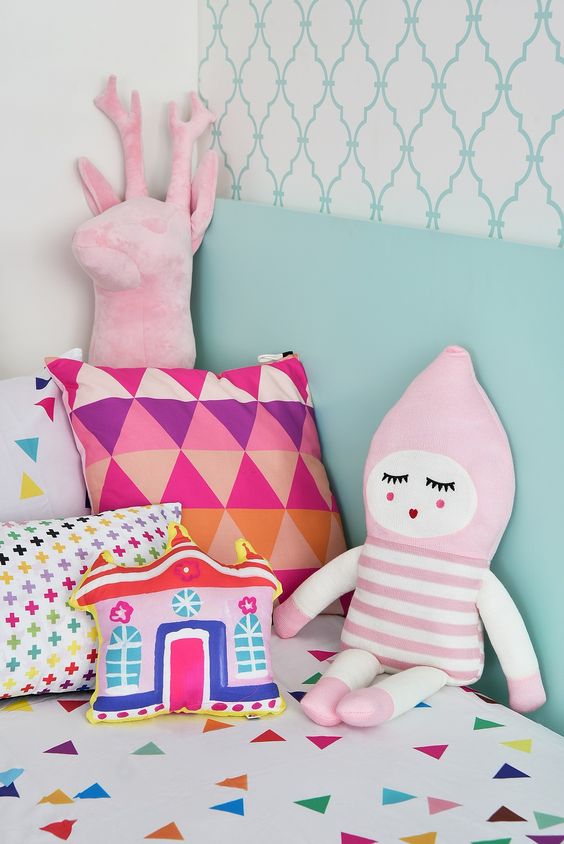
2. Pillows
Cushions are an inexpensive decorative piece that fits perfectly into any room in the house, they convey an atmosphere of comfort. In children’s rooms, they are used to decorate the bed and you can find many models of pillows that can be used in the bedroom: colorful ones, with fun patterns and even original shapes (animals, hearts, etc.).
 |
 |
3. Chairs
Chairs are very functional in a child’s room when accompanied by a table. Little ones love expressing their creativity on paper and there’s no better space than “their” desk. Chairs are also fantastic for creating a “play” with the colors in the room.
4. Lamps in bedroom decoration
5. Colorful furniture
A piece of furniture can be the main point of the room and the basis of the decoration of the room, being a strategic point for the use of colors. But don’t overdo it, on the one hand children could get bored with the color and on the other hand it can make it difficult to change the decoration later
6. Useful and fun furniture
Useful furniture is perfect for children because some contain fun objects, such as: car-shaped beds, bunk beds with slideouts and many more. If the furniture is useful and brings pleasure to your child, both sides win
7. Organizers
Organizers are very important not only for mothers, but also for their children! They not only allow you to easily keep the room tidy, but also help your child learn from an early age to organize and participate, helping to tidy up.
8. Chalkboard wall
The wall chart is very accessible and serves as a toy for the child. Allows for customization because each child has their own way of expressing their imagination.
9. Shelves and niches
Shelves are an element that serves as a support for certain decorative elements. In small rooms it is quite functional because they are very accessible for storage, allowing you to place toys, books, stuffed animals, etc. Shelves vary in shape, just look for the one that best fits your child’s corner.
Kennels are very versatile as they fit into virtually any environment and are available in different sizes and colors and can be placed randomly.
10. Images and signs
Pictures are the walls’ best allies. Images with soft lines and playful themes are charming, but you can also opt for geometric patterns, which bring a more modern vibe. Children’s paintings are an option that can work well if you are careful with the choice of design and location.
Signs are an original form of decoration and can be supplemented with paintings or wall stickers, decorative letters, lights.
A child’s bedroom is much more than a place to sleep. It can be a play area, a reading corner, a place to study and, above all, a personal space where children can feel comfortable. For this reason, decorating the room should combine creativity with practical decisions.
The good news is that creating an attractive children’s room does not necessarily require an expensive renovation. Changes to furniture placement, storage, lighting, colors and accessories can completely transform the environment.
1. Create Different Areas for Different Activities
Even a relatively small bedroom can be divided into functional zones. The bed naturally defines the sleeping area, while another corner can be reserved for toys and creative activities.
For school-age children, a desk can establish a dedicated study area. Keeping these activities somewhat separated can make the bedroom easier to organize and help children understand where different objects belong.
A small rug, different lighting or furniture placement can visually define each zone without requiring physical partitions.
2. Choose Furniture According to Their Size
Furniture should be comfortable and practical for the child using it. Shelves positioned too high or drawers that are difficult to open can make children dependent on adults for simple everyday tasks.
Low storage units, accessible drawers and appropriately sized tables can encourage greater independence.
At the same time, consider how quickly children grow. Some adjustable desks, chairs and storage systems can adapt over several years, reducing the need to replace furniture frequently.
3. Make Storage Simple
Toys, books, clothes and school materials can quickly create clutter. The easiest storage system is usually one that children can understand and use themselves.
Baskets and boxes work well for toys, while open shelves can keep favorite books and frequently used objects accessible. Drawers can be divided into categories to make smaller items easier to find.
Storage underneath the bed is another useful solution, particularly in compact bedrooms where every available area matters.
4. Let Children Participate in the Decoration
Although adults usually make decisions about budget, furniture and safety, children can participate in selecting some decorative elements.
Allowing them to choose between several colors, bedding designs, posters or accessories can make the room feel more personal.
Their interests will inevitably change over time, so it may be better to express current preferences through elements that can be replaced easily rather than permanent finishes.
5. Use Color Strategically
A children’s room does not need every wall painted in a strong color. A neutral base combined with brighter accents often provides greater flexibility.
Color can be introduced through bedding, rugs, curtains, artwork, storage boxes and cushions. An accent wall can also create personality without overwhelming the entire space.
As the child grows, these smaller decorative elements can be updated without requiring a complete renovation.
6. Include a Comfortable Reading Corner
Encouraging reading can be easier when children have an inviting place dedicated to books. A small chair, floor cushions or a comfortable corner near a bookshelf may be enough.
Good lighting is particularly important. A reading lamp or nearby natural light can make the area more pleasant and functional.
Displaying some books with their covers visible can also make them easier for younger children to recognize and choose.
7. Pay Attention to Lighting
A children’s bedroom benefits from several types of lighting rather than relying exclusively on one ceiling fixture.
General lighting should illuminate the entire room, while a desk lamp can provide focused light for homework and creative activities. Softer bedside lighting can create a more relaxing atmosphere before sleep.
Natural daylight should also be considered when positioning the desk and main activity areas.
8. Keep Safety in Mind
Safety should influence every major design decision. Tall or heavy furniture may need appropriate securing, while electrical cables should be organized and kept away from areas where children play.
Furniture with stable construction and appropriate dimensions is especially important for younger children. Sharp corners and fragile decorative objects should also be considered carefully.
The room should provide enough open floor space for comfortable movement without creating unnecessary obstacles.
9. Leave Space for Play and Creativity
It can be tempting to fill every available wall and corner with furniture, but children also need empty space.
An open area on the floor can accommodate building blocks, games and imaginative activities. A small table can provide a surface for drawing, crafts or puzzles.
Creative displays can also become part of the decoration. Children’s drawings and projects can be placed in simple frames or on a dedicated display area, allowing the room to change as they create new things.
10. Design a Room That Can Grow With Them
One of the smartest approaches is to distinguish between long-term elements and temporary decoration.
The bed, wardrobe, desk and major storage pieces can have relatively simple designs capable of remaining useful for years. Current interests can then appear through posters, bedding, toys and other accessories.
A room designed this way can gradually evolve from a young child’s bedroom into a space suitable for an older child without requiring a complete redesign.
Creating Their Own Special Space
Decorating a children’s bedroom can be a meaningful Children’s Day project because the result becomes part of their everyday life. Instead of focusing exclusively on how impressive the room looks, consider how easily the child can sleep, play, study, store belongings and move around independently.
The most successful children’s rooms combine personality with practical organization. Comfortable furniture, accessible storage, appropriate lighting and flexible decoration create a foundation that can adapt as children grow.
Most importantly, including children in some of the decisions can turn the transformation into an experience they enjoy. Their bedroom then becomes more than another decorated room in the house—it becomes a space that genuinely feels like their own.
Latest Posts Published

10 reasons to buy an LED desk lamp
Cosmina Ruxandra Chinciu: The joy of the client when he sees that in reality
Luxury bedrooms – Poliform product
Shower with gutter – solution for continuous floors in bathroom desig
Studio layout – creative configuration solutions
Reinventing the bathroom: Laufen’s Sonar collection sets new standards

The kitchen. The heart of the house
Living room interior design – Design styles
5 bathroom design ideas from Villeroy & Boch