Indigenous architecture is a profound reflection of the harmony between human beings and nature. And by understanding the choices made in construction processes, it is possible to value the richness of these practices and learn from their solutions in terms of efficiency and sustainability.
More than just houses, the the traditional constructions of the original peoples are cultural expressions who carry ancestral knowledge, precise techniques and an intimate relationship with the environment.
In today’s article, Casoca seeks to explore the construction materials used in these buildings, highlighting their technical specifications, dimensions and practical applications.
Indigenous architecture is one of the oldest manifestations of human ingenuity. In Brazil, peoples like the Guarani, Yanomami and Tikuna developed construction techniques adapted to their territoriesusing local resources intelligently.
These constructions are, in addition to shelters, spaces for coexistence, rituals and protection against climatic variations. And the choice of materials used is directly linked to availability in the surrounding area, climate and the specific needs of each community.
The intimate relationship with nature gives rise to an architecture that is both functional and symbolic.
Indigenous architecture reflects the harmonious relationship between indigenous people and the natural environment. Using the resources available in the region itself, its constructions are durable, functional and adapted to the climate.
Below, discover the main materials used in this ancient tradition:
Madeira
The wood is one of the pillars of indigenous constructionpresent in support structures, roofs and interior partitions. Species such as ipê, cedar and Brazilwood are often chosen for their resistance to humidity and insect attack.
The average density of these woods varies between 0.8 and 1.1 g/cm³, guaranteeing durability and stability. Main hollow beams, for example, can reach up to 6 meters in length and 20 cm in diameter, allowing structures up to 10 meters in height to be supported.
Oh the extraction process is carefulthus avoiding unnecessary damage to the forest, and the treatment is carried out using natural techniques, such as the application of plant resins for waterproofing.
Straw and leaves
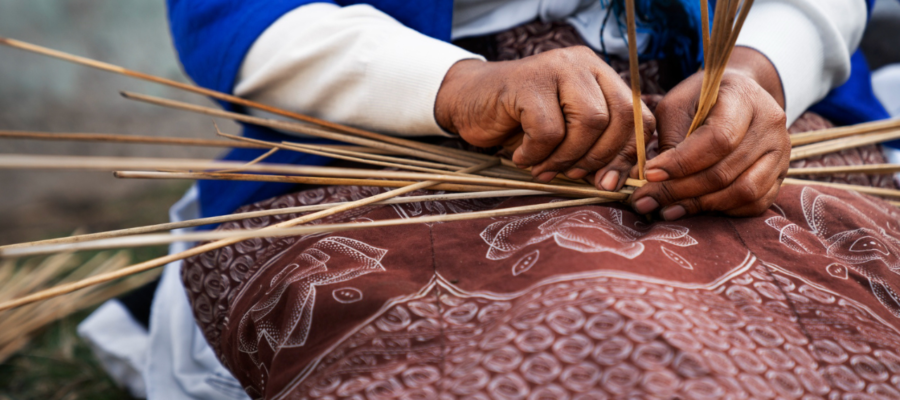
The roof of native buildings is often made of straw or interwoven leaves, light and efficient materials protection against rain and sun. Palm straw (like that of the buriti palm) is one of the most used, with fibers that can reach up to 3 meters in length.
Its arrangement in superimposed layers, with an average thickness of 15 to 20 cm, guarantees thermal and acoustic insulation. Banana leaves are used in humid regions because they dry quickly and do not accumulate fungus.
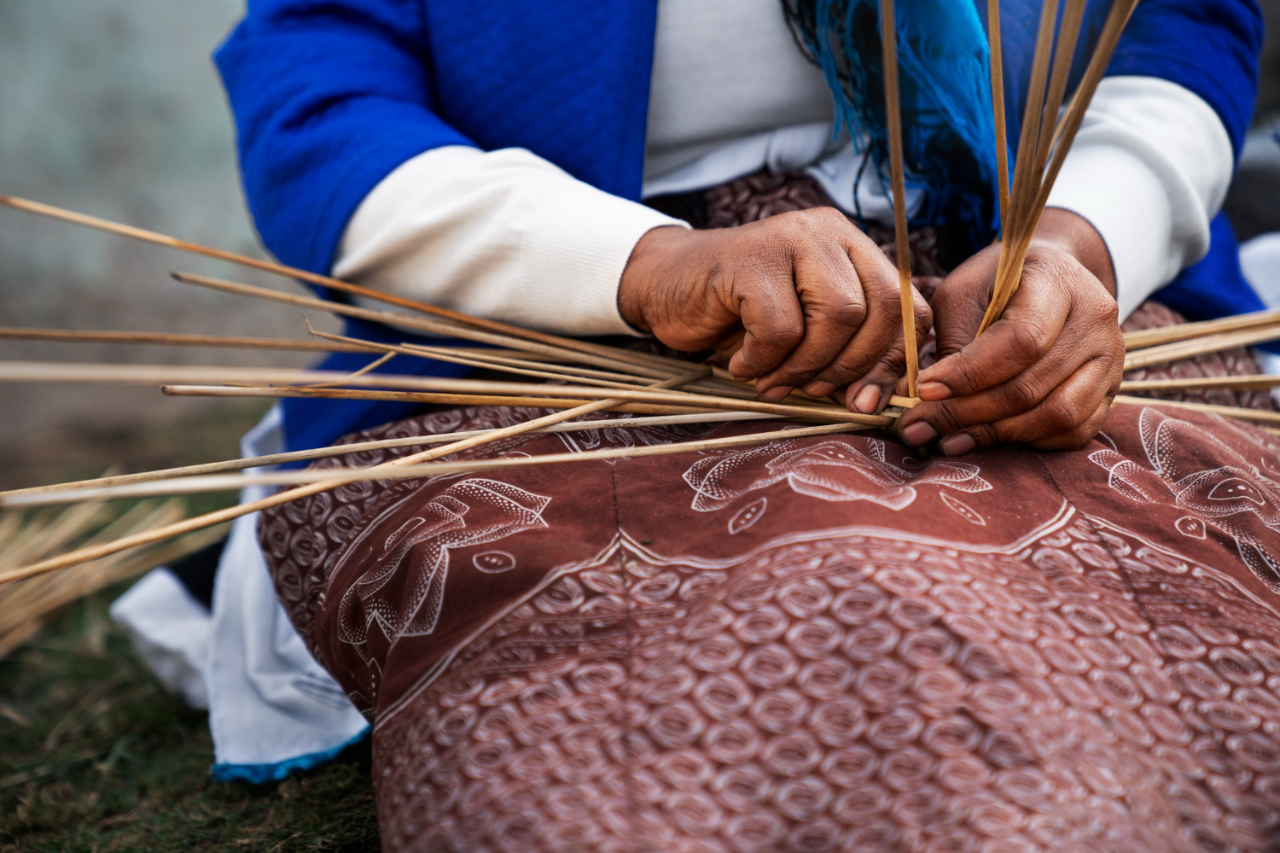
The braiding of these materials is done manuallycreating patterns that vary according to the tradition of each people.
Barro
Clay is widely used in techniques such as rammed earth and adobe.
Rammed earth involves compacting layers of moist soil, generally 15 to 20 cm thick, between wooden planks. This method gives walls with high thermal inertiaable to keep the interior cool during the day and warm at night.
Adobe, on the other hand, is made from manually molded blocks, measuring approximately 30 x 20 x 10 cm, which are dried in the sun before application. We also use a clay with a fine particle size, with particles less than 0.002 mm, which guarantees cohesion and resistance to erosion.
Stones and rocks
In mountainous regions, such as those inhabited by the Andean peoples, stones are used to build foundations and retaining walls. Sedimentary rocks, such as sandstone, are favored for their ease of cutting and their low density (around 2.2 g/cm³).
The stones are arranged in even layers, with joints filled with clay or natural cement, creating structures that can last for centuries.
In some construction, blocks up to 50 cm long are used to form walls with an average thickness of 40 cm.
Vines and natural fibers
Vines, like those of the Ambé species, are used to attach beams and secure roofs. Their tensile strength, which can reach 500 kg/cm², makes them ideal for light and flexible structures.
Additionally, curauá fibers are used to reinforce clay walls, increasing their resistance to cracking. These materials are sustainably harvestedensuring the renewal of resources.
Indigenous techniques are characterized by their simplicity and effectiveness.
A ocasfor example, is built with a conical or rounded structureformed of wooden beams inclined and linked at the top. The walls are covered with clay or leaves, depending on the local climate.
Me and longhousecommon in the Amazon, has a rectangular plan and a gable roof, up to 12 meters high, allowing air circulation and heat dissipation.
Oh adda temporary construction, is built with lightweight materialslike sticks and leaves, in a few hours.
Indigenous architecture is a example of sustainable construction. After all, the materials used are biodegradable, extracted in a way that preserves the ecosystem and the use of these resources reduces the need for transportation, thereby minimizing the carbon footprint.
Additionally, construction techniques are adapted to the climate, eliminating the need for artificial air conditioning systems. In a world where Civil construction is responsible for 40% of global CO₂ emissionsthese practices offer valuable lessons.
However, despite its relevance, indigenous architecture faces threats such as deforestation, urbanization and loss of traditional knowledge.
However, integrating these techniques into modern construction can pave the way for more sustainable and inclusive architecture.
Contemporary projects are already beginning to incorporate elements such as use of natural fibers e bioconstruction techniquesshowing that dialogue between tradition and innovation is possible and necessary.

< -count href="https://blog.casoca.com.br/arquitetura-indigena/"/>
Latest Posts Published
Building materials in indigenous architecture
Architect Siza Vieira
Discover the history of Milan Design Week

How to create a good closet design?

discover the program created exclusively for architects and designers
ancient tradition that turns out to be a current solution to heat

11 Great Wireless Smart Light Ideas
Development of farms and barns: rustic elegance in Tuscany

know what they are really looking for