The selection of fapricots for house curtains offers multiple options and is a quest that involves both aesthetic and functional aspects. This process aims to balance the personal needs of the client with those of the space in question.
Let’s start with aesthetics and functionality
THE stylistic context is the starting point. Taking into account the existing wall coverings, the presence of parquet or specific types of tiles, the dominant colors on the walls and in the furniture, we can offer solutions in accordance with the client’s tastes.
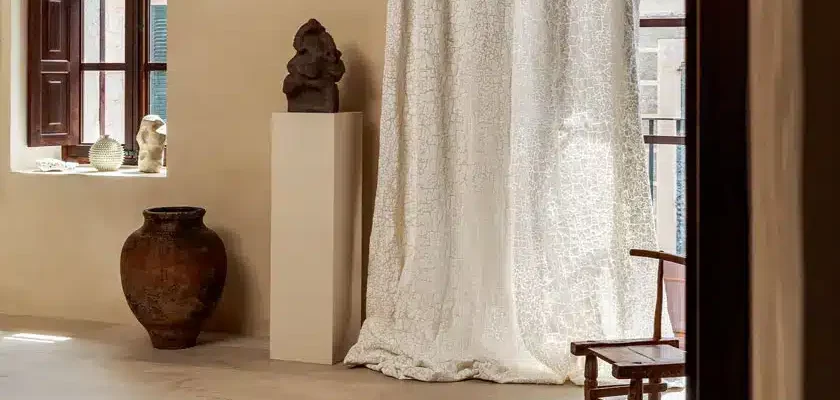
Choosing one curtain over another can completely transform the perception of space. A light and intangible veil will add a welcoming touch to an extremely minimalist environment, softening its linearity. Conversely, a heavy decorative curtain, perhaps made of velvet, will not only darken but also improve sound insulation, adding character to an already elegant and luxurious room.
The curtain: a complement to your interior decoration
As in the world of fashion, each fabric follows a specific style and trend. Curtains complete the decor, personalize it and make it warmer.
We guide you in your search for the best result, to custom curtains for your home. From the choice of model, which can be technical like a roman blind or a roller blind, or decorative like a crimped blind, we move on to the type of technical systems available in various shapes and finishes.
The fabric is the protagonist and is selected based on various parameters, including the “hand of the fabric”, that is, its ttexture, body and softness. Other factors include transparencywhich determines how light filters into the room, ensuring privacy and comfort, and durability and maintainabilitytwo important aspects. Some fabrics are washable, dyeable and have been treated for easy maintenance.
Protection against light depends on the weave of the fabric; its weight can vary from sheer fabrics to completely blackout fabrics that create a “blackout” effect. They are commonly used in hotel rooms and increasingly at home, providing full coverage against the sun’s rays.
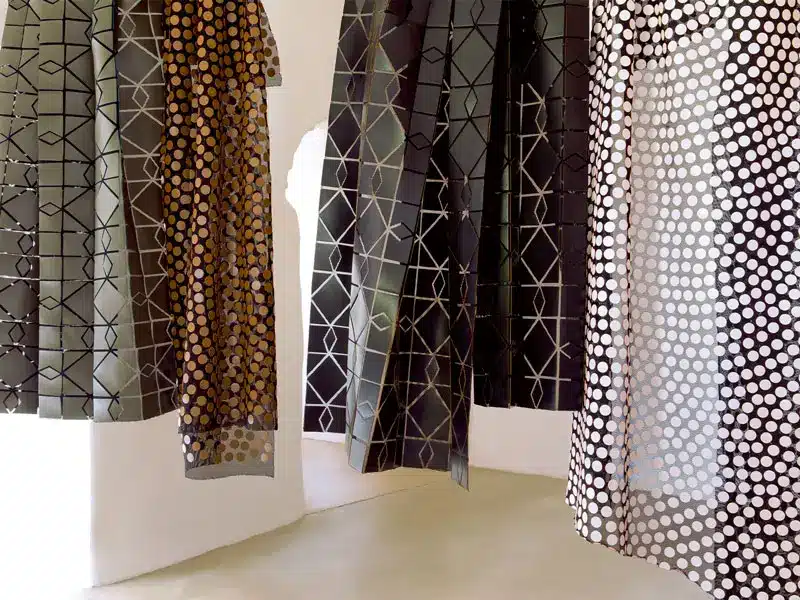
In “service” rooms, practicality is a primary requirement and blinds should not be bulky, but should provide privacy. In kitchens, especially near worktops, the option often chosen is the bundle curtain, a very functional model with minimal bulk and vertical movement. These can be personalized with imaginative fabrics, possibly embroidered, which dialogue with their environment. Alternatively, roller blinds, especially models with vertical steel cables, ensure that the fabric slides along the frame even in the presence of wasistas openings.
These minimalist curtain models are also often preferred for bathrooms, where space is limited and it must be optimized as much as possible.
Our advice in choosing curtains offers you numerous options illustrating all the aspects to take into account. Fabrics must be touched, observed in the sun, and tried in the environment for which they are intended. Indeed, the light varies and the perception of the fabric can change. The environment itself suggests the most suitable fabric.
What fabric to choose for curtains?
THE choice of fabric offers endless possibilities. The collections offered by textile publishers present a wide range of options, from which we draw to create the tailor-made curtain for each individual project. Above all, the composition of the fabric guides us towards what we prefer: natural fibers such as cotton and linen, or equally good synthetic weaves, ranging from sheers to heavy fabrics suitable for decorative curtains, such as velvet or moire.
They can be classified according to the pattern, which can be plain, patterned, striped or in small coordinates. In addition, curtain fabrics, depending on the threads used, have very different textures, ranging from shiny to matte. If a metallic thread is present, the fabric appears more elegant, while some wool curtains are impalpable and, once installed, appear impeccable.
Most curtain voiles are available in different weights and natural shades such as ecru and beige, which differ mainly in the weave of the fabric and the type of treatment.
THE creative phase is very stimulating: by imagining the final result, we can combine different textures, from a textured and crunchy one to a lighter one like a veil, perhaps adding a touch of color, until the design takes shape.
Our passion for beauty and creativity drives us constantly search for novelty in the world of textile publishing. We renew our sample collections every year to offer innovative and high quality products.
If you are looking for advice for your home, do not hesitate to contact us. We will be happy to listen to your needs and support you in your furniture choices thanks to our experience.
What about curtain systems: rails, rods or pelmets?
When choosing a blind model, it is equally important to consider how to install it. It is for this reason that we consider it essential to carry out a preventive inspection. Different models of decorative rails or rods with rings are available on the market, in different finishes such as chrome, lacquered or satin.
These can be installed either oon the ceiling or oin the walldepending on the proportions of the window and the surrounding space. We recommend placing the blind at least 15 cm from the window frame, if space permits, to avoid seeing the window when entering the room.
In the case of blackout curtains, a fabric-covered lambrequin is the best option. This way the overall effect of the curtain will be rich and very elegant, even with simple and not too elaborate fabrics. Additionally, light will not filter through the top of the window. In this case, it is necessary that the fabric touches the ground a few centimeters to avoid any light entering.
In conclusion, the length of the curtain is a choice of personal taste. However, in our opinion, the curtain should touch the floor by approximately 3 cm, both for aesthetic reasons and to compensate for possible slight differences in height.
Fabrics and curtains, a marriage of style and functionality
At this point, we hope to have clarified the key considerations to keep in mind when choose fabrics for your curtains.
It is a balance that must be sought between aesthetics and functionality, between the style of the room and practical needs such as soundproofing and privacy. Remember that fabrics are like the “skin” of your curtains; touch them, observe them and above all try them in the context in which they will be placed. Don’t forget to also consider technical details, such as type of hanging system and length. Each element helps make your space not only beautiful, but also functional and comfortable.
If you have any doubts or questions, do not hesitate to contact an expert: advice from a professional can make the difference between an ordinary choice and one that you’ll be excited about every time you walk into the room.
Latest Posts Published
Building materials in indigenous architecture
Architect Siza Vieira
Discover the history of Milan Design Week
How to create a good closet design?

discover the program created exclusively for architects and designers
ancient tradition that turns out to be a current solution to heat
11 Great Wireless Smart Light Ideas
Development of farms and barns: rustic elegance in Tuscany

know what they are really looking for