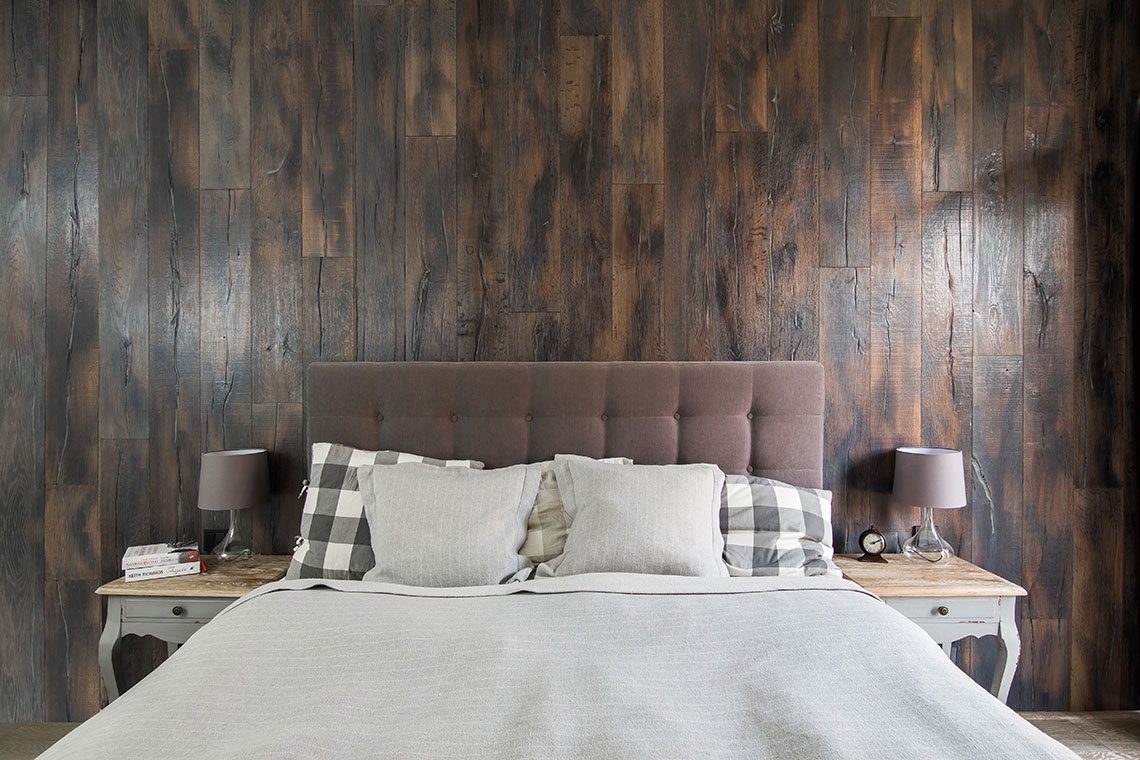
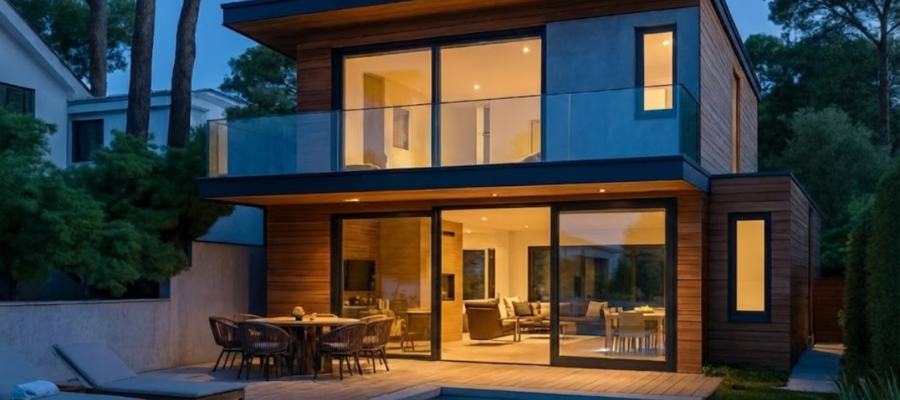
Light is one of the most difficult elements to “sell” in a project: Unlike furniture or colors, it is not directly visible in the image. The challenge is that the architecture is not static: spaces change, angles transform and sensations vary depending on the light throughout the day.
But how to translate all this into the project with the help of AI?
- In this prompt, the proposal is to explore different lighting scenarios to improve the project and help the client understand that light is not just a function, it is an experience.
The order will help you present the lighting project and the multiple ambiances created by the light throughout the day. While a single rendering only shows a specific section, varying images allows you to broaden the perception and value of the project.
So, shall we go?
- Access an image AI (like ChatGPT, Gemini or Midjourney);
- Download the reference image;
- Paste the prompt below and customize the content between [colchetes]:
I am attaching a reference image of a project.
Your mission is to recreate the environment with different overall lighting. Keep the geometry, furniture, colors and framing 100% the same, but completely replace the current lighting.
The original image features harsh shadows and strong sunlight. You should ignore these shadows and render the scene as if it were a new photograph with the following light setting:
[tipo de luz desejada – escolha uma das opções abaixo e cole aqui]
Mandatory instructions (critical):
• Delete current shadows: If there are shadows drawn on the floor or furniture in the original image, erase them. The new light dictates the new shadows.
• Consistency of materials: the elements of the environment should have the same color, but react to the new light.
• Flat lighting (as for diffusa): If the required light is diffuse, eliminate any high contrast.
The result must be photorealistic and have high definition, ArchViz style.
Lighting options to fill in parentheses
- Diffuse light (cloudy day)
Cloudy day, diffused and soft light coming from the windows, without harsh or marked shadows, “flat” and uniform lighting, neutral white balance, calm and serene atmosphere, white and soft natural light. - Direct sun (midday)
Clear, sunny skies, strong, direct sunlight entering the room, high contrast, hard, well-defined shadows cast on the floor and furniture, bright colors, heavily exposed glass areas. - Golden hour (sunset)
Golden Hour lighting, low sun on the horizon coming in at an angle, warm golden and orange tones, long and dramatic shadows, warm and cinematic atmosphere, dust particles visible in the rays of light. - Blue hour (twilight)
Blue Hour lighting, exterior sky in a deep blue tone, interior lit by warm artificial lights (yellow lamps) creating a warm/cold color contrast, sophisticated and elegant late afternoon atmosphere. - Night light (artificial)
Night scene, complete darkness outside (or distant city lights), environment lit exclusively by the project’s artificial lights (spotlights, lamps, LED strips), dramatic shadows of point light, intimate and luxurious atmosphere.
And that’s not all: in the additional prompt below, you will learn how to use AI to convince the client that the environment loses a lot in the absence of lighting design.
- Now let’s move on to the other side of the story: what happens when the environment is solved with a single central lighting. The result goes beyond technical simplification: the volumes flatten, the textures disappear and the project loses its strengtheven when the architecture is good.
Shall we go there?
- Access an image AI (like ChatGPT, Gemini or Midjourney);
- Download the reference image;
- Paste the prompt below:
Use the attached image as a gold standard for geometry, furniture, textures and colors. Nothing in the physical layout of the environment should change, other than the removal of lighting elements. Your mission is to completely replace your current lighting system with a new setup.
The new scenario (light instructions): imagine that all previous light sources (sunlight in windows, recessed spotlights, indirect lights, table lamps) have been turned off, blocked or excluded from the project. The stage is now lit exclusively by a single artificial light source centered on the ceiling (such as a large overhead light or general central light).
Mandatory parameters of the new lighting:
• Radial origin: the light should emanate brightly from the center of the ceiling downwards.
• Radial shadows: Shadows of objects (furniture, chairs) should be projected from the center towards the exterior walls, and may be a little harsh and marked on the floor.
• Light decay (vignette): The center of the room (the floor in the middle) should be the brightest area. The corners of the room, where the walls meet and the areas under wall furniture, should be visibly darker, because the central light does not reach there strongly.
• Functional atmosphere: the light should appear utilitarian, general and even in the center, losing the drama and warmth of layered lighting. The color temperature should be neutral to warm (approximately 4500 K).
Expected result: a high-definition photorealistic rendering that shows exactly how this space would behave if there was just one bright bulb in the middle of the ceiling.
Latest Posts Published

Building materials in indigenous architecture
Architect Siza Vieira
Discover the history of Milan Design Week
How to create a good closet design?

discover the program created exclusively for architects and designers
ancient tradition that turns out to be a current solution to heat
11 Great Wireless Smart Light Ideas
Development of farms and barns: rustic elegance in Tuscany

know what they are really looking for